3D printing gives cosplayers the ability to create helmets that are detailed and historically and culturally accurate.
Understanding the importance of cultural motifs can give your cosplay helmet designs a deeper meaning.
Tools like 3D modeling software are crucial in taking your idea from a sketch to a tangible object.
Personalization is important – your helmet can have unique touches that show off your personality.
Interacting with the cosplay community online can give you ideas and feedback for your projects.
Why 3D-Printed for Historical & Cultural Inspired Cosplay Helmets
When you enter the world of cosplay, you’re not just wearing a costume; you’re becoming a character, a piece of history, or even a cultural symbol. One of the most powerful ways to embody your chosen persona is through a carefully crafted helmet. With the help of 3D printing, you have the ability to create intricate and authentic headgear.
The Importance of Culture and History in Helmet Design
The essence of any unforgettable cosplay helmet is in its beginnings. Whether it’s the feathered helmet of a Norse deity or the smooth eye shield of a future soldier, the top designs are those that respect their sources. Cultural and historical aspects provide your cosplay with substance and narrative, turning a basic outfit into a story.
For example, if you’re creating a Spartan helmet, you’ll need to delve into the world of ancient Greek armor, learning the reason for each curve and crest. It’s not just about looking the part; it’s about being the part, too.
Reinterpreting History and Culture in Helmet Design
It’s important to stay true to historical accuracy, but there’s also space for imagination. Picture a helmet that combines the detailed designs of a Celtic warrior with the sleek technology of a cyberpunk world. This fusion of the past and the future can result in something truly one-of-a-kind, a piece that narrates its own tale.
The Beauty of Customization in Cosplay Helmets
Your helmet is a blank slate, and 3D printing is your tool. Customization is more than just picking a color; it’s about creating a piece that’s distinctly yours. Perhaps it’s a concealed symbol that bears personal meaning, or maybe it’s an LED light design that replicates the stars. These individual touches are what transform your helmet from a simple prop to a work of art.
Creating Your Ideal Helmet
From Idea to 3D Printed Reality
Each memorable cosplay starts with a thought. But how do you transform that initial flash of inspiration into something you can hold in your hand? The process of going from idea to 3D print is a voyage of exploration, education, and, above all, imagination.
Drafting Your Concept: Prior to 3D Printing
Begin by doodling your thoughts. Get a pen and some paper and start sketching. Your doodles are the roadmap to your vision. They don’t need to be perfect; they just need to capture the key elements of your design. Think about the overall form, any complex details, and how these elements come together to make a unified piece. You don’t need to be a master artist – basic sketches will suffice. The key is to encapsulate the idea of what you want to make.
Once you’ve conceptualized your design, it’s time to digitize it using 3D modeling software. This is where your helmet starts to form, polygon by polygon.
3D Design Programs for Cosplay Creators
After you’ve completed your drawings, it’s time to select your software. Blender, Tinkercad, or ZBrush are all excellent choices for creating your helmet in 3D. If you’re new to these programs, there are many tutorials available to help you get started. The important thing is to be patient; if you take the time to learn the software, you’ll be able to create anything you can dream of.
Keep in mind that the most memorable helmets are those that have a tale to tell. So, let’s jump in and discover how to create a 3D-printed cosplay helmet that isn’t just a piece of costume but a wearable representation of history and culture.
Putting Pen to Paper: The First Step to 3D Printing
Before you even consider switching on your 3D printer, you need to get your thoughts down on paper. Sketching might feel a little outdated, but it’s a crucial part of the creative process. It gives you the freedom to play around with different shapes and ideas quickly and easily – without having to commit to a digital design.
Discover the best 3D design software for cosplay enthusiasts to bring your costume ideas to life.
After you’ve created sketches that reflect the vision in your mind, the next step is to turn them into a 3D model. This might seem intimidating, but it’s actually quite doable with modern software. If you’re new to this, start with easy-to-use programs like Tinkercad, then move on to more advanced software like Blender or ZBrush as you get more comfortable. These tools will allow you to create a detailed, accurate helmet design that’s ready to be printed.
Keep in mind that the path to a successful 3D model is paved with patience and practice. Don’t try to rush through the learning process, but rather, lean into it. As you become more familiar with the software, you’ll find that your ability to realize even the most complex designs will increase dramatically.
Crafting Your Ideal Helmet
Let’s dive into the process of crafting your ideal helmet. This isn’t just about creating a visually appealing piece – it’s about making something that truly speaks to you and the character you’re embodying. This is where your imagination comes to life and where your knowledge of culture and history serves as your secret weapon in design.
Creating 3D Printed Cosplay Helmets: Taking Inspiration from Cultures and History
Cosplay helmets can be a true work of art when they take inspiration from a variety of cultures. Whether you’re looking back in time or drawing from contemporary pop culture, there are countless ideas waiting to be discovered. However, it’s important to remember that it’s not just about replicating a design – it’s about making it unique to you. Let’s explore how historical and cultural influences can be the foundation of your next project.
3D Printing Breathes New Life into Cultural Icons
Picture the grand helmets of medieval knights, the detailed crowns of ancient pharaohs, or the memorable masks from your beloved superhero films. These symbols carry weight because they’re steeped in cultural history. With 3D printing, you can recreate these icons for the contemporary world, adding a personal touch that makes them uniquely your own.
Consider the iconic Spartan helmet. Its unique crest and bronze shine are immediately identifiable. But what if you added LED lights to the plume or used a chrome finish to give it a modern twist? These types of creative choices can make your work stand out in the colorful cosplay community.
Where History and Imagination Meet in Helmet Design
Looking to Ancient Cultures for Inspiration
Cosplay designers can tap into the rich stories and artifacts of ancient civilizations. Picture taking a cue from the detailed carvings of Mayan temples or the intimidating masks of Viking raiders. The trick is to pay homage to these historical inspirations while incorporating a hint of fantasy to make them unique.
Drawing Motivation from Popular Culture Trends
Pop culture is filled with helmet designs that have fascinated fans globally, from the streamlined helmets of Star Wars stormtroopers to the enigmatic masks of comic book vigilantes. These designs can inspire your own creations by incorporating recognizable cultural symbols, such as a samurai’s kabuto or an astronaut’s helmet, and re-envisioning them with modern elements or historical touches to make them distinctive.
Revamping Mythology and Historical Warriors
Mythology is a rich source of inspiration for helmet designs. Modern materials and technology can be used to reinterpret the winged helmet of Hermes or the horned helmet of a Norse god, giving them a new look that still reflects their legendary origins.
Here are some specific examples of cultural and historical design inspirations:
Ancient Egyptian pharaoh helmets, such as the iconic Nemes headdress worn by Tutankhamun.
Greek and Roman mythological figures, like Hermes with his winged helmet or Athena with her ornate helmet featuring an owl.
Norse mythological characters, such as Odin with his raven-adorned helmet or Valkyries with their winged helmets.
Samurai helmets (kabuto) from feudal Japan feature intricate designs and symbolic elements.
Medieval European knights’ helmets, like the great helm or the bascinet, with their distinctive shapes and visors.
Aztec or Mayan warrior headdresses featuring vibrant colors and intricate patterns.
African tribal masks and headdresses showcasing unique cultural symbolism and craftsmanship.
Native American war bonnets, with their elaborate feather arrangements and cultural significance.
These examples demonstrate the wide range of cultural and historical design inspirations available for 3D-printed cosplay helmets. By drawing from these sources, cosplayers can create unique and meaningful designs that pay homage to the past while embracing modern technology.
Blending Sci-Fi Features with Ancient Armour
There’s an exciting allure in merging the ancient with the modern. Imagine a Roman centurion’s helmet with a glowing visor or a medieval helmet with an integrated communication system. These are the types of creative concepts that can elevate your cosplay game.
Creating Your Character with Cosplay Helmets
At the end of the day, your helmet is a representation of your character as a cosplayer. It’s a standout item that can display your hobbies, your talents, and your commitment to the craft. Whether you’re a fan of history, a lover of fantasy, or a sci-fi nerd, your helmet can demonstrate that love in a physical, wearable way.
Why are 3D-printed Helmets Ideal for Cosplay?
3D-printed helmets are perfect for cosplay because they provide unmatched accuracy and personalization. You can get details that are hard or impossible to duplicate with conventional crafting techniques. In addition, the option to print in different materials means you can make lightweight, long-lasting helmets that are comfortable to wear all day at a convention.
How Can You Tailor a Helmet to Fit Perfectly?
Comfort is key, and 3D printing is a pro at this. You can tailor your digital model to match your head size perfectly, guaranteeing your helmet is as cozy as it is awesome. Adding padding and adjustable straps will make it even more wearable.
Which Cosplay Helmet Designs Are Most Popular?
There’s a wide variety of styles available, from mythical creatures like dragons and elves to futuristic designs featuring robots and extraterrestrials. However, what really sets your helmet apart is the personal touches you add, such as your chosen colors, the materials you use, or any extra gadgets you include.
How can I incorporate electronics or lights into my helmet?
Embedding electronics such as LEDs or even motors for dynamic parts can animate your helmet. Strategize where you’ll require room for batteries and wires, and take into account the weight these enhancements will contribute. With a bit of fundamental electronics comprehension, you can generate effects that genuinely impress.
Where Can I Display and Show Off My Finished Helmet?
After you’ve finished your work of art, it’s time to show it off. Social media platforms such as Instagram and TikTok are excellent for displaying your creations. Additionally, you can participate in online forums and communities that focus on cosplay, where you can receive criticism, network, and discover ideas for your next endeavor.
Don’t forget each helmet tells a tale. Whether you’re embodying the soul of a bygone fighter or giving life to a comic book protagonist, your helmet is not just a costume accessory – it’s a demonstration of your inventive prowess and ability. So, go ahead and begin creating; the realm of 3D-printed cosplay helmets is ready for you.
Main Points
3D-printed helmets can serve as a platform for the expression of cultural and historical influences in cosplay.
Helmet designs can be enriched and made more authentic by incorporating cultural motifs and historical references.
Personalization is crucial, and 3D printing allows for custom fits and unique design elements.
By incorporating electronics such as LEDs and servos, a helmet can be transformed from a simple prop to an interactive work of art.
Sharing your finished helmet on social media and within cosplay communities can provide useful feedback and inspire others.
What Are Some Popular Cosplay Helmet Designs?
The helmet you choose for your cosplay can serve as a statement piece that can either make or break your costume. Popular designs are often inspired by beloved characters from movies, video games, and comic books. Helmets such as the Mandalorians from Star Wars, Master Chiefs from Halo, or even the iconic Iron Man helmet are among the cosplay community’s favorites. However, the most important thing is not how well-known the design is but how well it represents your creativity and passion.
What’s the Process for Incorporating Electronics or Lights into My Helmet?
Integrating electronics into your helmet may appear challenging, but it can significantly enhance your costume’s overall appeal. Start with something simple, like LED strips for glowing eyes or complex designs. If you’re up for a challenge, you might consider adding servos to create moving components, such as a retractable visor. However, remember to plan your power source and consider the weight, as comfort is key when you’re going to be wearing it all day at conventions.
Example: Picture a Viking helmet adorned with LEDs along the horns that illuminate to imitate the Northern Lights. This contemporary spin on a historical design is not only visually enchanting but also pays respect to the profound bond the Norse culture has with this natural event.
Where Should I Display My Finished Helmet?
After you’ve added the final details to your helmet, it’s time to display it. Social media sites such as Instagram, Facebook, and TikTok are ideal for posting pictures and videos of your masterpiece. Furthermore, cosplay forums and communities like Cosplay.com or the RPF (Replica Prop Forum) are great for receiving feedback, swapping advice, and networking with other hobbyists who share your love for crafting.
Instagram: Broaden your reach by using hashtags like #Cosplay, #3DPrinting, or ones that are specific to your character.
Facebook: Become a member of cosplay groups where you can share photos and ask for help or opinions.
TikTok: Make brief videos that highlight the features of your helmet, particularly if it has movable parts or lights.
Online Forums: Participate in dedicated communities to talk about methods, materials, and fresh concepts.
Whether you’re an experienced cosplayer or a newbie, the process of making a 3D-printed cosplay helmet is thrilling. With the appropriate tools, a little patience, and a lot of creativity, you can create a piece that’s not just a costume but a wearable masterpiece. So, use these suggestions, let your creativity soar, and start creating the helmet that will make everyone turn their heads at your next cosplay event!
Conclusion
Each helmet tells a tale. Whether you’re embodying the soul of a bygone fighter or giving life to a comic book protagonist, your helmet is not just a costume accessory – it’s a demonstration of your inventive prowess and ability. So, go ahead and begin creating; the realm of 3D-printed cosplay helmets is ready for you.
Additional resources:
Category
Resource
Details
3D Design Software
Blender
Free and open-source software for 3D modeling. Blender Website
A platform for cosplayers to share their work and connect. Visit Cosplay.com
Reddit’s Cosplay Community
A subreddit for sharing cosplay projects and tips. Visit Reddit
Frequently Asked Questions (FAQs):
Q: How can I ensure my cosplay helmet design is culturally accurate and respectful? Research the cultural or historical context of your chosen design inspiration thoroughly. Consult reliable sources, such as academic publications, museums, or cultural experts. Be mindful of cultural sensitivities and avoid appropriating sacred or religiously significant elements.
Q: What are some ways to incorporate cultural or historical design elements into a modern or fantasy-themed cosplay helmet? Consider blending traditional patterns, symbols, or motifs with modern materials or futuristic elements. For example, you could create a sci-fi helmet with Celtic knot patterns etched into the surface or a fantasy helmet featuring traditional Japanese lacquer techniques.
Q: How can I find reference images for historically accurate helmet designs? Visit museum websites, consult history books, or explore online archives for authentic reference images. The Metropolitan Museum of Art and the British Museum offer extensive online collections featuring historical helmets and headdresses from various cultures.
Q: Are there any cultural or historical helmet designs that are particularly well-suited for 3D printing? Helmets with intricate, repeating patterns or symmetrical designs, such as Aztec or Mayan headdresses, can be excellent candidates for 3D printing. The precision and detail achievable through 3D printing can help recreate the complex geometries and textures found in many historical and cultural helmet designs.
Finally, We hope this guide has inspired you to create your own unique cosplay helmets. Share your experiences, ask questions, and post photos of your completed helmets on social media using #Cosplay3DPrint.
If you found this guide helpful, please share it with your friends and fellow cosplayers. Subscribe to our newsletter for more tutorials and tips.
Thank you for being a part of our creative community. Keep crafting and having fun!
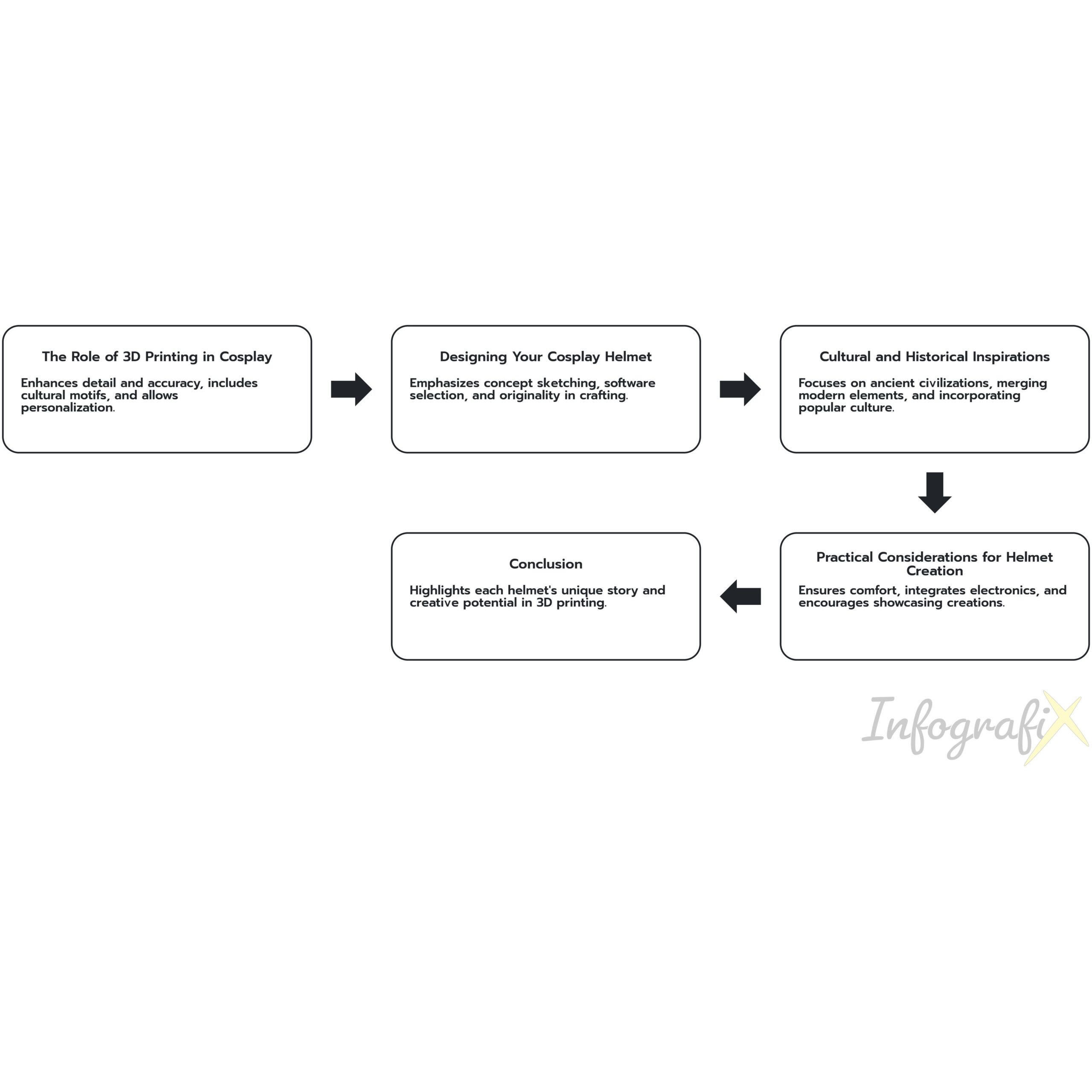
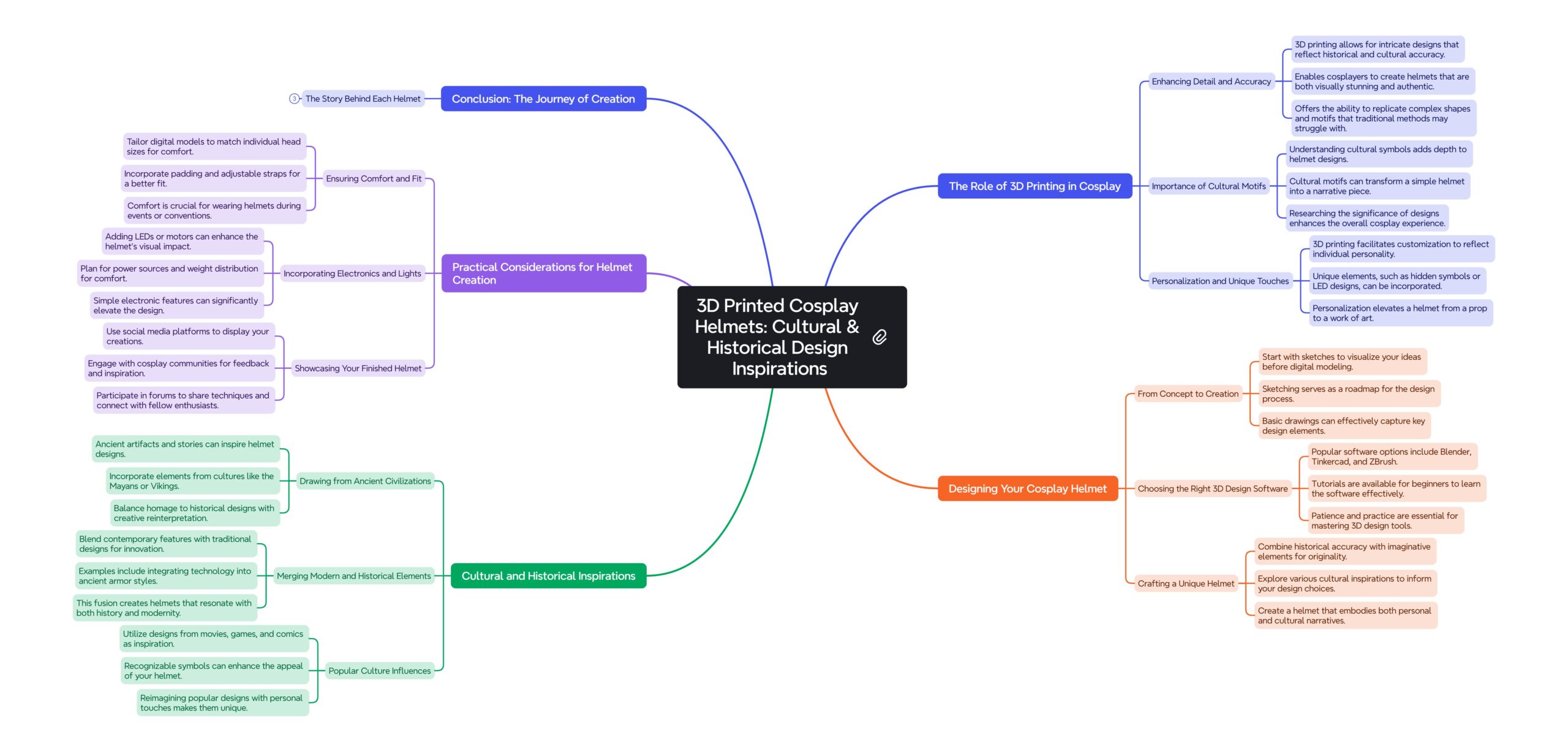
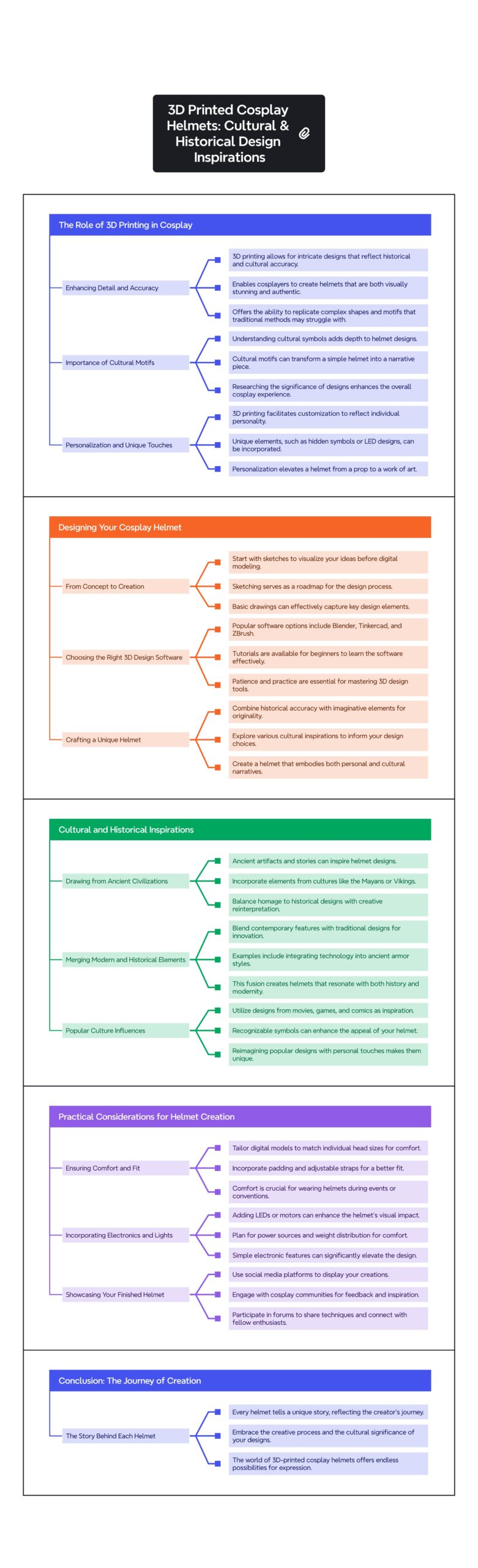
As we wrap up, the following grid provides a structured overview of the key concepts discussed in this post. Use it as a quick reference to reinforce your understanding and explore the connections between the main ideas:
Entrepreneur Admin, & Proud Creator of Cosplay3DPrint.com, Coming form a medical Background interested in Cosplayers community and the Art of 3D Printing.





Leave a Reply