
Advanced 3D Printed Cosplay Helmets & Masks, Engineering Support Patterns
Key Takeaways
-
3D printing enables detailed and personalized cosplay helmet designs.
-
Support structures are crucial for maintaining the shape and integrity of complex prints.
-
Selecting the correct support pattern improves both the aesthetic and functional aspects of helmets.
-
Bioinspired reinforcement patterns can enhance the strength and comfort of helmets.
-
Understanding overhang management is key for printing intricate facial features.
The Role of Support Patterns in Complex Designs
In 3D printing, particularly for cosplay helmets and masks, support patterns act as the backbone of your project. They ensure that the intricate designs you imagine are brought to life without collapsing or warping. Most importantly, they help preserve the integrity of the print during the process, which is vital for complex designs.
Consider that you’re making a helmet with horns or a mask with intricate facial details. If you don’t have the right support, these features could droop or even snap off. As a result, knowing how to use support patterns isn’t just helpful; it’s necessary if you want to get the best results from your cosplay projects.

Making the Impossible Possible
Ever marvel at the intricate details on a cosplay helmet and wonder how they did it? That’s the beauty of 3D printing with carefully engineered support structures. It allows for the creation of complex details that would be difficult or impossible to achieve with traditional methods.
In addition to this, support patterns are useful in handling overhangs and other difficult features of 3D printing. They offer the required base for parts that protrude from the main body of the helmet or mask, guaranteeing that each detail is highlighted as planned.
Support Patterns: Engineering for Complex Helmet Designs
When it comes to complex helmet designs, the engineering of support patterns is a crucial factor. The aim is to strike a balance between adequate support and minimal use of materials. This balance is important not just for the success of the print, but also for its cost and environmental footprint.
Essential Support Areas in Helmet and Mask Printing
Comprehending essential support areas is crucial to successful helmet and mask printing. These areas are zones that need additional support because of their shape. For example, the chin region of a mask or the top of a helmet frequently requires extra care to avoid warping during printing.
How to Distribute Weight Effectively in Cosplay Helmets
Another crucial aspect to consider is weight distribution. A helmet that is too heavy can be uncomfortable or even dangerous to wear. By implementing strategic support patterns, you can eliminate unnecessary weight while preserving the structural integrity of the helmet. This is where bioinspired reinforcement patterns can come in handy as they imitate natural structures that are strong and lightweight.
Dealing with Overhangs in Facial Features
Facial features can be tricky to 3D print because of their intricate shapes and overhangs. Proper overhang management is crucial to making sure these features print accurately without sagging or loss of detail. Support structures are key to this process, giving the backing needed to print these complex elements correctly.
Understanding Support Patterns
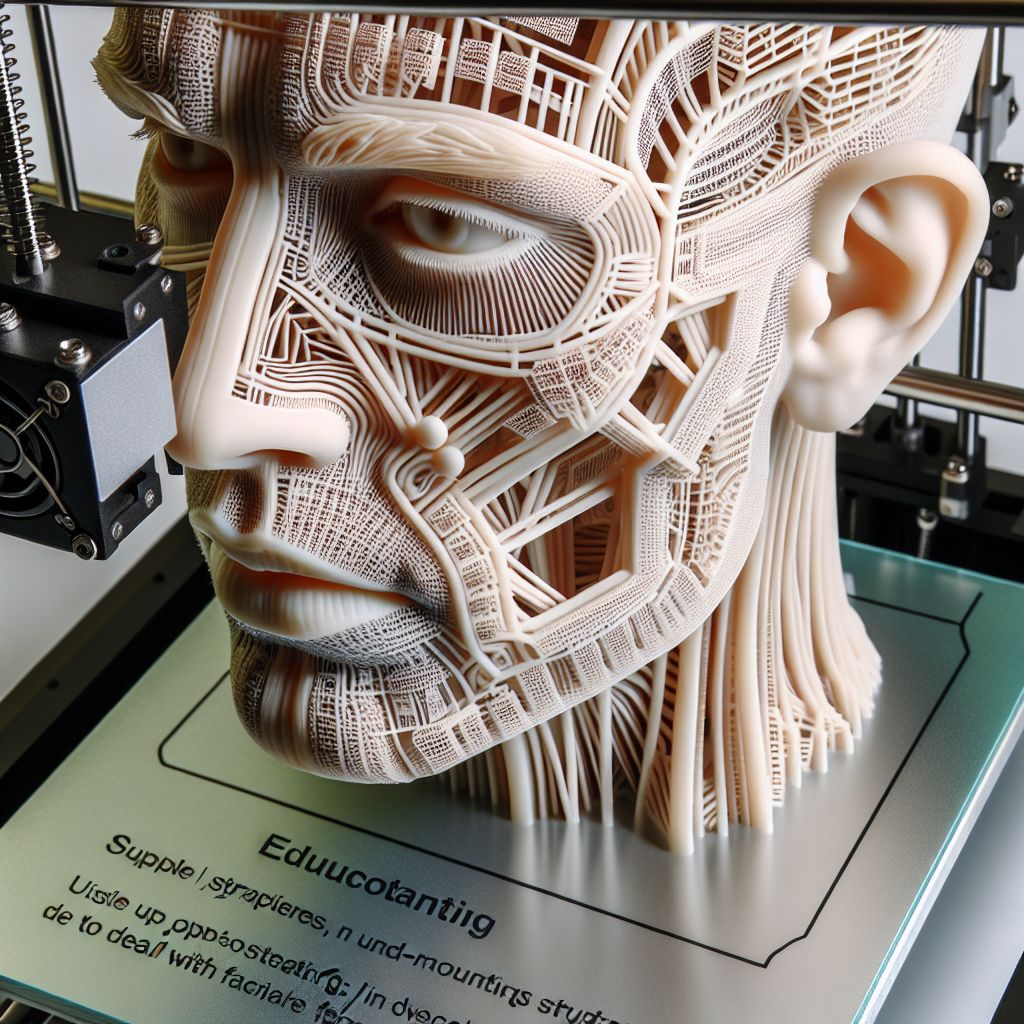
Before we dive into the nitty-gritty of support patterns, let’s first understand what they are and how they function. Simply put, support patterns are temporary structures that are added to a 3D print to provide support to overhangs and other difficult geometries. Once the print is done, these are removed, leaving behind only the final product.
To achieve optimal results:
Technical Specifications for Optimal Helmet Printing
-
Recommended wall thickness: 2-3mm for durability
-
Support density: 15-20% for most helmet designs
-
Optimal layer height: 0.2mm for detail, 0.3mm for speed
-
Infill percentage: 15-20% for lightweight designs, 30-40% for durability
-
Overhang angles: Support is needed for angles over 45 degrees
With these specifications in mind, let’s explore how different support structures work;
Breaking Down 3D Printing Support Structures
Support structures come in a variety of forms, each with their own pros and cons. The most frequently seen types are tree supports, linear supports, and lattice supports. Different structures are better suited for different designs, so picking the right one for your project is crucial.
The type of support you choose can also impact the final look and feel of the product, so also need to consider choosing right one for your specific design.
The Impact of Support Types on Print Quality and Success
The support structure you select can have a significant impact on the quality and success of your print. For instance, while tree supports can help reduce material use and print time, they may not provide sufficient stability for prints that are exceptionally large or heavy. Conversely, linear supports may offer increased stability, but they might be harder to remove in a clean manner.
Various Kinds of 3D Printing Support Structures
For complex designs like cosplay helmets and masks, support structures are necessary to get the best 3D prints. They provide temporary support to overhangs and other difficult geometries during the printing process. Choosing the correct type of support is key to making sure the final product is what you want.
There are many kinds of support structures, each best for different design needs. Knowing the pros and cons of each can help you make smart decisions about which to use in your projects.
Let’s break down exactly how to implement these support patterns step by step:
Tree Supports:
-
Start with 45-degree angle branches
-
Set contact point size to 0.8mm
-
Use 2mm branch diameter
-
Space branches 3-4mm apart
-
Enable “Support Interface” for clean removal
Linear Supports:
-
Set support spacing to 2.5mm
-
Use zigzag pattern for stability
-
Enable support roof/floor
-
Set support density to 15%
-
Use 1-2 wall count for easy removal
Some specific applications;
Tree-Like Supports for Complex Helmets
Tree-like supports are a fan favorite for complex helmets. They mimic the branching of a tree, providing support exactly where it’s necessary and reducing material usage. This makes them perfect for complex designs with several overhangs, as they provide support without adding unneeded bulk.
Tree supports are not only efficient but also easier to remove than other types, which lowers the chance of damaging delicate features during post-processing. However, due to their lightweight nature, they may not be the best choice for very large or heavy prints.
Tree support structures. Are great for detailed helmets because they provide support in just the right places, while also reducing the amount of material used.
Stability through Linear Support Structures
Linear support structures are great for stability. They are especially good for designs that have fewer overhangs but need solid support along a consistent axis. These supports look like scaffolding and provide a solid foundation for the print. For more information, check out this guide on 3D printing support structures.
Linear support structures are best for designs with less overhang, offering stability.
How to Select the Best Support for Your Model
When it comes to choosing the right support structure, it all depends on the design you are working with and the features it has. You’ll need to think about how complex the overhangs are, how heavy the final print will be, and how easy it will be to remove the supports without causing any damage. By considering all these factors, you’ll be able to get the best results from your 3D printing projects.
|
Support Type |
Pros |
Cons |
Best For |
|---|---|---|---|
|
Tree Supports |
– Reduces material usage |
– May not provide enough stability for large/heavy prints |
Complex helmets with multiple overhangs |
|
Linear Supports |
– Provides excellent stability |
– Can be harder to remove cleanly |
Designs with fewer overhangs but needing solid support |
|
Lattice Supports |
– Good balance of stability and material usage |
– Can be challenging to remove in tight spaces |
General purpose, works well for most designs |

Performance is Improved with Internal Reinforcement Patterns
While it’s important to have external supports during the printing process, it’s equally important to have internal reinforcement patterns. These patterns add strength and stability, making sure the helmet or mask can handle the wear and tear of use.
For helmets that need to provide protection, such as those used in sports or combat cosplay, internal reinforcements are crucial. These patterns, which mimic natural structures, can enhance the helmet’s strength and flexibility without adding unnecessary weight.
Take for instance a helmet that’s been designed for a character with large horns. It might benefit from internal reinforcements that mimic the strength and resilience of natural antlers. This approach not only enhances the helmet’s durability but also ensures it remains comfortable to wear.
Patterns inspired by nature, such as the honeycomb structure of a beehive or the complex lattice of a bird’s bone, provide strength and flexibility. This makes them perfect for helmets, which need to be durable enough to withstand impact but light enough to be worn comfortably.
-
Lightweight strength through honeycomb patterns
-
Flexibility and durability with bone-like lattices
-
Impact distribution through leaf vein structures
Impact Resistance with Lattice Internal Structures
Another effective way to enhance impact resistance in helmets is through lattice internal structures. These structures create a grid-like pattern within the helmet, distributing impact forces evenly across the surface. This not only protects the wearer but also helps maintain the helmet’s shape and integrity. For more insights on the advantages of using 3D printing in helmet design, check out this some revolutionary advantages.

How to Reduce Helmet Weight for Comfort
When it comes to designing helmets for cosplay, weight is a significant consideration. The helmet needs to be comfortable to wear, especially if it’s going to be worn for long periods. One way to achieve this is by using strategic reinforcement patterns to reduce the weight of the helmet without sacrificing its strength or durability.
Uses in Designing Helmets and Masks
The basics of 3D printing and support structures aren’t limited to helmets; they can be applied to a variety of mask designs. Whether you’re making a mask for a superhero, a villain, or a mythical beast, knowing these principles can help you get the best outcome.
Overcoming Design Difficulties
Creating helmets and masks with complex designs can be difficult. It can be a struggle to manage overhangs and create a final product that is both durable and light. However, with the right support and reinforcement patterns, these difficulties can be overcome to create beautiful cosplay pieces.
Exciting Features for Masks and Helmets
With 3D printing, you can add a ton of cool features to your designs. You can include moving parts, integrated electronics, and more. Plus, if you understand how to provide support and reinforcement, you can really push the limits of what you can do in cosplay design.
Case Studies: Success Stories in 3D Printed Cosplay Helmets
Looking at real-world examples of successful 3D-printed cosplay helmets can give you valuable insights and inspiration for your own projects. These case studies highlight the importance of choosing the right support and reinforcement patterns to achieve the desired results.
For example, a helmet design inspired by the structure of a bird’s skull not only offered superb protection but also decreased the helmet’s total weight. This creative approach shows how 3D printing can revolutionize cosplay design.
Here’s a detailed example of a successfully completed project:
Iron Man Mark 85 Helmet Project:
-
Printed in 4 sections
-
Used tree supports at 15% density
-
Achieved smooth curves using 0.12mm layer height
-
Support removal took 45 minutes
-
Final weight: 750g”
These real-world examples show how proper support selection impacts the final result;
Triumph of Bioinspired Helmet Design
A project that used the structure of a bird’s skull as inspiration for a cosplay helmet is one of the most striking examples of bioinspired helmet design. The creators were able to make a helmet that was both incredibly strong and lightweight by using this natural design. This not only made it more comfortable for the wearer, but it also provided excellent protection, making it a standout at any cosplay event.
The success story we’re about to share shows the incredible potential of 3D printing when it’s inspired by nature. By copying the complex structures we find in the natural world, we can make helmets that look great and work even better. This is a whole new way to think about how we design for cosplay, and it’s really exciting.

3D Printing Revolutionizes Cosplay Mask Production
3D printing has revolutionized the world of cosplay masks, allowing for some truly remarkable innovations. With the flexibility and precision of 3D printing technology, it’s now possible to create masks with moving parts, integrated lighting, and even sound effects. These features add a whole new level of realism and immersion to cosplay costumes.
For instance, a mask modeled after a well-known superhero’s helmet could have features like illuminated eyes and a voice changer. Not only do these additions make the mask look cooler, they also make the character feel more real in a way that wasn’t possible with older crafting techniques.
It’s important to carefully plan the design, choose the right materials, and support structures to achieve these effects. This ensures that the mask not only looks good but is also comfortable and sturdy enough to withstand a cosplay event.
-
Plan for moving parts and electronics early in the design process.
-
Choose lightweight materials to ensure comfort during extended wear.
-
Use support structures to maintain the integrity of complex features.
Overcoming Common Design Limits with 3D Printing
3D printing has revolutionized the way we approach cosplay design, allowing us to overcome many of the limitations of traditional crafting methods. For instance, intricate details that would be time-consuming and difficult to achieve by hand can now be printed with ease. Additionally, the ability to customize designs means that each piece can be tailored to fit the wearer’s specific needs and preferences.
Troubleshooting Tips:
For issues when they may arise:
|
Problem |
Solution |
|---|---|
|
Support structures breaking during printing |
• Increase support density by 5% |
|
Difficult support removal |
• Increase support Z distance to 0.2mm |
|
Poor surface quality under supports |
• Enable support interface |
Final Thoughts
For cosplayers, 3D printing has become a game-changer, making it possible to craft incredibly detailed, customized helmets and masks. Knowing how to use the correct support and reinforcement patterns, we can take things to the next level, recreating our beloved characters with even more precision and authenticity.
With the continued growth of technology, the opportunity for innovation in cosplay design is unlimited. By keeping up with the newest methods and materials, we can continue to make beautiful pieces that capture and inspire.
Key Points and Innovations in 3D Cosplay Printing
-
3D printing allows for complex and custom cosplay designs.
-
Support structures are necessary for maintaining the integrity of the print.
-
Bioinspired patterns increase strength and decrease weight.
-
Advanced features such as moving parts and lighting are now achievable.
-
Understanding the limitations of design and how to overcome them is crucial to success.
By including these elements in our projects, we can create cosplay pieces that are not just visually stunning but also practical and comfortable to wear. This blend of art and engineering is what makes 3D printing such a thrilling tool for cosplay enthusiasts.
Remember to play around and try new things as you start your 3D printing adventure. The sky’s the limit, and with every project, you’ll learn and understand more, which will help you make even cooler designs.
Common Questions
If you’re new to 3D-printed cosplay, you might have a few questions. Here are some of the most frequently asked questions and their answers to help you get started. For a deeper dive, check out our 3D-printed cosplay helmet guide.
Let’s delve deeper into these questions to give you the information you need to excel in your cosplay projects.
-
How do support structures impact the quality of 3D prints?
-
What are the most effective materials for 3D printing helmets?
-
How can I make support removal more efficient in my 3D prints?
-
What is the role of bioinspired patterns in design?
-
Is 3D printing an effective method for complex cosplay designs?
What impact do support structures have on the quality of 3D prints?
Support structures play a vital role in preserving the form and stability of intricate prints. They stop drooping and distortion, guaranteeing that your model is printed as planned. Nevertheless, they can also influence the surface finish of the print, so it’s crucial to select the appropriate kind of support and take it off cautiously.
What materials are recommended for 3D printing helmets?
The recommended materials for 3D printing helmets depend on the desired characteristics of the final product. PLA is a common choice because it’s easy to use and inexpensive, but it might not be appropriate for applications that require high-impact resistance. ABS is stronger and more durable, making it a better choice for protective helmets.
Furthermore, composite materials that include fibers such as carbon or glass can offer increased strength and decreased weight, making them perfect for challenging applications.
|
Material Type |
Characteristics |
Recommended Brands and Uses |
|---|---|---|
|
PLA |
– Easy to use |
eSUN PLA+ (White) |
|
ABS |
– Stronger |
Prusament ASA |
|
PETG |
– Durability with flexibility |
Overture PETG |
|
Composites |
– Enhanced strength |
FormFutura Carbon Fiber PLA |
|
Polycarbonate |
– Impact resistance |
Polymaker PolyMax PC |
|
Nylon |
– Professional finish |
MatterHackers NylonX |
How can I optimize support removal in my 3D prints?
To optimize support removal, it’s important to choose the right type of support for your design and to use the appropriate tools and techniques for removal. Tree supports, for example, are often easier to remove than linear supports, reducing the risk of damaging the print.
How do bioinspired patterns contribute to design?
Bioinspired patterns are pivotal in increasing the durability, flexibility, and comfort of 3D-printed designs. These patterns, which imitate natural structures, offer excellent performance attributes, making them perfect for helmets and masks that must be impact-resistant yet lightweight.
By integrating bio-inspired patterns into your designs, you can strike a balance between strength and weight, ensuring that your pieces are both practical and comfortable to wear.

Is 3D printing useful for detailed cosplay designs?
Absolutely, 3D printing is a fantastic resource for crafting detailed cosplay designs. With knowledge of support and reinforcement principles, you can create detailed and creative elements that would be challenging to make with conventional crafting techniques.
With the right approach and a bit of creativity, you can create cosplay items that are not only visually stunning but also comfortable to wear. The trick is to push the envelope and try new things, pushing the boundaries of what’s possible in cosplay design.
Remember, every 3D printing project you undertake is a chance to learn and improve. With hard work and imagination, you can create cosplay props that are stunning and inspirational and give a fresh, exciting twist to your favorite characters.
Finally, We’d love to hear about your experiences with 3D printing cosplay costumes!
Share your tips, tricks, and lessons learned. If you have any questions or need further guidance, feel free to ask – our community is here to help.
Don’t forget to share this post with your fellow cosplay enthusiasts and aspiring 3D printing creators. Together, we can inspire and support each other in bringing our favorite characters to life!


Leave a Reply